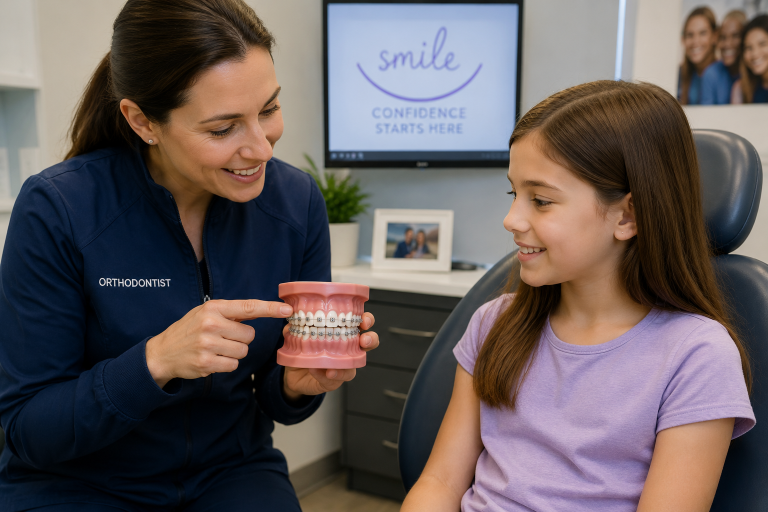
Many parents assume orthodontic treatment doesn’t begin until the teenage years, but Las Vegas pediatric dentists often recommend that patients get an orthodontic evaluation much earlier. While most children won’t need braces right away, an early evaluation by a Las Vegas orthodontist allows dental professionals to monitor jaw development, identify bite problems, and determine the best time for treatment if it’s needed.
The American Association of Orthodontists recommends that children receive their first orthodontic evaluation by age 7. At this age, a child typically has a mix of baby teeth and permanent teeth, giving orthodontists valuable insight into how the smile is developing.
If you’re wondering when your child should see an orthodontist in Las Vegas, here’s what every parent should know.
Why Is Age 7 the Recommended Age for an Orthodontic Evaluation?
By age 7, several important changes have usually taken place:
- The first permanent molars have erupted.
- The upper and lower front permanent teeth have begun to come in.
- The jaws are still actively growing.
- Bite patterns are easier to evaluate.
Even though many baby teeth remain, orthodontists can often identify developing issues that may benefit from early monitoring or treatment.
An early evaluation doesn’t necessarily mean your child will get braces. In fact, many children simply return for periodic checkups until they’re older.
What Happens During an Orthodontic Evaluation?
A first orthodontic evaluation is usually simple, comfortable, and painless.
Your childrens dentistry & orthodontics provider may:
- Examine your child’s teeth and bite
- Evaluate jaw growth and facial development
- Look for crowding or spacing concerns
- Check how permanent teeth are erupting
- Take digital X-rays or photographs if needed
- Discuss whether treatment is necessary now or later
Signs Your Child May Need an Earlier Evaluation
Although age 7 is the general recommendation, some children benefit from seeing an orthodontist even sooner.
Talk with your Las Vegas pediatric dentist if your child has:
- Difficulty chewing or biting
- Early or late loss of baby teeth
- Crowded or overlapping teeth
- Teeth that don’t come together properly
- A crossbite, underbite, or overbite
- Thumb sucking that continues beyond early childhood
- Mouth breathing
- Speech concerns related to tooth or jaw position
- Jaws that shift or make noises when opening and closing
These signs don’t always require immediate treatment, but they do warrant an orthodontic evaluation.
What Is Early Orthodontic Treatment?
Early orthodontic treatment—sometimes called Phase 1 treatment—takes place while a child is still growing.
Rather than simply straightening teeth, early treatment often focuses on guiding jaw development and creating enough room for permanent teeth to erupt properly.
Treatment may include:
- Palatal expanders
- Space maintainers
- Limited braces
- Habit appliances
- Other growth-guiding orthodontic devices
Not every child needs Phase 1 treatment, but for those who do, addressing problems early can simplify future care.
Benefits of Early Orthodontic Evaluation
Even when treatment isn’t immediately necessary, an early orthodontic evaluation offers several advantages.
- Detect Problems Before They Become More Serious
Some bite issues become more difficult to correct as children grow.
Identifying concerns early allows Las Vegas orthodontists to monitor development and recommend treatment at the most effective time.
- Guide Jaw Growth
Because children’s jaws are still developing, orthodontists can sometimes influence jaw growth using specialized appliances.
This may help improve bite alignment and reduce the need for more complex treatment later.
- Create Space for Permanent Teeth
When baby teeth are lost too early or crowding develops, permanent teeth may erupt in less-than-ideal positions.
Early intervention can help preserve or create the space needed for healthy tooth eruption.
- Reduce the Risk of Tooth Damage
Children with severely protruding front teeth are more likely to experience dental injuries during sports and everyday play.
Correcting significant protrusion early may reduce the risk of chipped or broken teeth.
- Improve Confidence
Some children become self-conscious about crowded teeth, gaps, or bite issues at an early age.
While orthodontic treatment isn’t always necessary for cosmetic reasons alone, improving a child’s smile can also support their confidence during important developmental years.
Does Every Child Need Early Orthodontic Treatment?
No. In fact, most children don’t need braces immediately follow an evaluation at age 7. That’s one of the biggest misconceptions about taking children to the orthodontist so early. Many parents assume that their child will leave the office with braces.
In reality, many children simply enter an observation phase following that first evaluation.
During periodic visits, the orthodontist monitors growth and determines the ideal time for treatment. Waiting can often be the best approach, especially when the remaining permanent teeth haven’t erupted yet.
When Do Most Children Actually Get Braces?
Although evaluations happen around age 7, comprehensive orthodontic treatment typically begins between ages 11 and 14.
By this stage:
- Most permanent teeth have erupted.
- Jaw growth is progressing.
- Children are mature enough to care for braces properly.
Every child’s development is unique, so treatment timing varies from one patient to another.
The Role of Your Pediatric Dentist
Routine dental checkups play an important role in identifying orthodontic concerns.
Your Las Vegas pediatric dentist monitors tooth eruption, jaw growth, and bite development during regular exams. If they notice potential alignment issues, they can recommend an orthodontic evaluation at the appropriate time.
Pediatric dentists and orthodontists often work together throughout childhood. By partnering with trusted providers of childrens dentistry and orthodontics, your child’s dental team can help ensure any developing bite or alignment concerns are addressed at the right time.
Supporting Children’s Dental Care at Home
While you can’t prevent every orthodontic issue, healthy habits can support proper oral development.
Encourage your child to:
- Brush twice daily with fluoride toothpaste.
- Floss every day.
- Wear a mouthguard during sports.
- Avoid prolonged thumb sucking or pacifier use.
- Attend routine dental checkups every six months.
These habits help keep teeth healthy and allow dental professionals to monitor your child’s growth over time.
Early Evaluations Lead to Better Long-Term Outcomes
The first orthodontic visit is much more about planning for the future than it is about rushing into braces. An early evaluation gives dental professionals the opportunity to identify potential concerns, monitor healthy development, and recommend treatment only when the timing is right.
Whether your child eventually needs braces, a palatal expander, or simply routine monitoring, early guidance can help create a healthier, more functional smile. With the right team supporting your family, you’ll have confidence that your child’s smile is growing exactly as it should.